
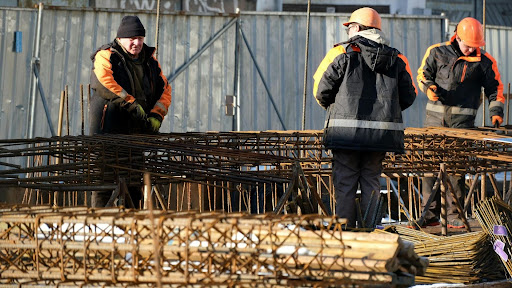
What are the main risks when handling and moving reo bar on site?
Reo bar (also written as reobar and reobars) is steel reinforcement that gives reinforced concrete its tensile strength, making it critical across Australian construction. The main risks come from its awkwardness, weight, and sharpness, especially around congested pours and during access changes during concrete placement.
Common injury mechanisms include manual handling strains, crush and pinch points, dropped loads, cuts and abrasions from sharp ends, slips and trips on uneven ground, and impalement risks around protruding reo bar near formwork edges. Rust, salt air, and exposure to coastal infrastructure can reduce grip and increase handling risk, which is why rust-resistant reo bar can support longer life and safer handling.
A practical site control is a “safety strip”, which is a physically marked and segregated zone around laydown and lifting areas to prevent pedestrian conflict and reduce impalement exposure.
What equipment is used to safely lift and transport reo bar?
The right equipment depends on length, bundle weight, access constraints, and proximity to formwork and LVL formwork frames. The goal is controlled lifting and transport without bending, whipping, or roll-off that can injure workers or damage reo bar before installation.
Typical options include crane lifts using rated lifting beams, forklifts with approved attachments, telehandlers, and purpose-built reo bar lifting tongs and clamps. They should use only certified gear and stay within SWL/WLL, with lift points chosen to prevent rotation and keep bundles stable.
Load-control essentials include tag lines, spreader bars to prevent bending and whipping, and securing bundles to stop rolling during travel and set-down. A “safety strip” on the ground should keep plant routes clear of workers and materials during lifts.
On dense urban sites, scaffold netting and chain shade mesh (50% and 90% coverage) can provide worker and material protection and reduce noise along lift corridors, with UV-resistant options for long-term outdoor use near sustained laydown and lift zones.
How should reo bar be stored before and during handling on construction sites?
Storage should prevent roll-away, reduce manual re-handling, protect workers, and keep reo bar clean and straight for correct installation and maximum concrete strength. Good laydown planning also lowers the likelihood of last-minute moves when access changes during pours.
They should plan a level area with dunnage and chocks, bundle by size and length, maintain clear aisles, and use signage so crews can pick safely without climbing over stacks. Positioning reo bar close to point-of-use reduces double handling and fatigue.
Corrosion control matters: keep reo bar off wet ground, manage coastal exposure, and consider rust-resistant reo bar to extend the lifespan of coastal infrastructure. Storage should be separated from formwork plywood and LVL formwork stock to avoid congestion, and formwork plywood maintenance for durability on-site helps reduce clutter and trip hazards near the laydown. A marked “safety strip” should define exclusion and traffic boundaries around storage and pick-up points.
What safety procedures reduce injuries when moving reo bar?
Baseline controls start with a pre-start risk assessment, SWMS/JSA alignment, and a dedicated lift plan for long or heavy bundles. These steps standardise decisions on equipment, travel paths, exclusion zones, and what to do when access changes mid-pour.
Manual handling rules should prioritise mechanical aids first, then team lifts for short lengths, keeping reo bar close to the body, avoiding twisting, and rotating tasks to reduce fatigue. Movement rules include maintaining clear travel paths, never standing under suspended reo bar, keeping hands clear of pinch points, and using tag lines for reobar load control.
They should treat the “safety strip” as a procedural requirement with exclusion zone markings, spotter control, and no-go areas during lifting and transport. Fewer bends and drops also protect reo bar quality so it installs correctly for maximum concrete strength, reducing rework and rehandling exposure.
Key site checks that reduce harm:
- Confirm SWL/WLL, attachments, and bundle weight before lifting
- Cap or control protruding ends where impalement is possible
- Keep laydown tidy, level, and chocked to prevent roll
- Use a spotter and maintain exclusion zones within the “safety strip”
- Stop the lift if access changes around formwork edges or congested pours
How do teams coordinate reo bar handling on busy construction sites?
Coordination is what turns a high-risk movement into a predictable flow, especially when multiple trades are working near formwork edges. They should assign clear roles such as dogger or rigger, spotter, plant operator, and leading hand, all movement of reobars.
Communication should use radio call signs, agreed hand signals, and a single point of command for each lift and shift. Interface controls should keep movements clear of LVL formwork installation and formwork plywood staging, because common issues with formwork plywood during concrete pouring often trigger last-minute access changes that complicate reo bar handling.
For perimeter protection on dense sites, scaffold netting and chain shade mesh can reduce dropped-object risk and improve separation near lift corridors, particularly where pedestrian routes run close to the “safety strip”.
Teams should review the next reo bar move before it happens, consistently mark zones, and enforce disciplined communication on every lift. They should implement the “safety strip” today, brief it at pre-start, and make it non-negotiable for the next pour.