
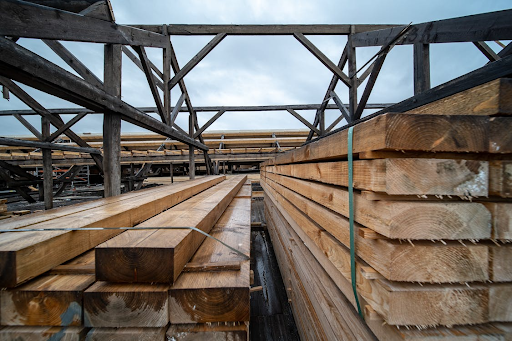
LVL timber formwork does not have a single fixed “weight limit” because it operates as a full structural system rather than an isolated component. In real site conditions, the key question is whether the entire lvl timber formwork system can safely support wet concrete loads, construction activity, and dynamic forces during a pour while maintaining stability and controlling deflection.
On Australian building sites, lvl timber formwork distributes loads across lvl beams, joists, bearers, props, and the formwork facing. When these elements are installed correctly and work together, the system performs reliably. However, if one part fails—such as a connection, prop, or bearing point—the overall capacity is compromised regardless of how strong the lvl beam itself is.
What Factors Affect the Load Capacity of LVL Timber Formwork?
What does “weight” include during a concrete pour?
In lvl timber formwork, “weight” is a combination of forces rather than a single load. It includes the vertical weight of wet concrete, lateral pressure on vertical forms, and live loads from workers, equipment, reo bar chairs, and pump hoses. These forces are constantly changing during placement, particularly when vibration is introduced.
Vibration and movement during a pour can temporarily increase pressure and create localised load spikes. This is why failures often occur mid-pour, when loads are uneven and dynamic, rather than at the beginning when everything appears stable.
Why is LVL timber formwork a system, not just an LVL beam?
Although an lvl beam is a key structural component, it is only one part of the broader formwork lvl system. Capacity depends on how loads transfer through joists, bearers, props, fixings, and bracing, and ultimately into the ground.
In practice, failures rarely occur because the lvl beam itself is too weak. More often, issues arise from crushed bearing points, loose or insufficient fixings, poor bracing, or prop settlement. This is why lvl timber formwork must always be treated as a system where every connection and support point matters.
How do moisture, wear, and reuse reduce capacity?
Reuse is one of the advantages of lvl construction, but it also introduces risk if materials are not properly maintained. Over time, LVL members can develop edge swelling, splits, or deformation, while repeated fastening can weaken connection zones.
Similarly, formwork ply can suffer from delamination, face wear, and edge damage. These issues reduce stiffness and affect how loads are distributed. If damaged materials are reused without adjustment, the effective capacity of the lvl timber formwork system is reduced.
Which site conditions increase demand on LVL formwork?
Several site and pour variables increase the demands placed on lvl timber formwork. Higher slump concrete and faster pour rates increase lateral pressure, particularly on vertical systems. Vibration further amplifies this by reducing internal friction in the mix.
Other factors, such as uneven load placement or stockpiling materials in one area, can create concentrated loads that exceed design assumptions. These conditions highlight why planning and supervision are critical in any lvl formwork setup.
Can LVL timber formwork reduce costs?
LVL timber formwork can reduce costs when it is designed and installed efficiently. Because LVL is engineered for consistency, it allows predictable spans and can reduce the need for excessive materials or labour.
However, these savings only hold when the system is properly planned. Poor installation or a single failure can quickly outweigh any cost benefits. This is why disciplined lvl construction practices are essential for both safety and cost control.
What LVL Timber Sizes Are Commonly Used for Formwork Support?
LVL timber formwork uses a range of members depending on the application. LVL beams are typically used as primary load-bearing elements, while joists support the formwork ply and transfer loads into bearers and props. In vertical systems, walers and soldiers play an important role in resisting pressure and controlling deflection.
Bearers and lvl beams often experience the highest loads because they collect weight from multiple joists. Their correct sizing and spacing are critical to maintaining overall system stability.
How should LVL spacing match formwork ply?
The performance of lvl timber formwork is closely tied to the formwork ply or facing material. If the span between supports is too wide for the plywood thickness, deflection occurs, resulting in uneven finishes and potential structural issues.
F14 and F17 grades are commonly used, with F17 offering greater stiffness for higher loads or tighter tolerances. In many cases, improving spacing rather than increasing thickness is the more efficient solution.
What should you check before you lvl timber buy?
When preparing to lvl timber buy for formwork, material quality should be carefully checked. Straightness, edge condition, and correct grading all affect performance. Damaged or twisted members create uneven load paths and increase the risk of failure.
Supplier consistency is also important. Reliable sourcing ensures that materials meet expected standards, reducing variability across the lvl formwork system and improving overall performance.
How do timber LVL formwork prices affect decisions?
Timber LVL formwork prices can vary significantly depending on size, grade, and supply conditions. While lower-cost options may seem attractive, they often require tighter spacing, more labour, and result in lower reuse rates.
In practice, higher-quality materials can reduce total project costs by improving efficiency and extending lifespan. This is especially important in large-scale lvl construction projects where reuse cycles have a major impact.
How Do Builders Calculate Load Limits for LVL Timber Formwork?
Load calculations for lvl timber formwork follow a structured process. Builders first define the type of structure, then calculate loads from concrete, reinforcement, and live site conditions. From there, they determine plywood spans, joist spacing, and size lvl beams and props accordingly.
This process ensures that the entire lvl formwork system works together safely, rather than relying on assumptions or rules of thumb.
Dead loads vs live loads
Dead loads include the weight of the lvl timber formwork system itself, including LVL members, plywood, and reinforcement. Wet concrete is also considered part of this load, although it behaves dynamically during placement.
Live loads include workers, tools, and equipment moving across the formwork. These loads are often underestimated, particularly when materials are stockpiled or concentrated in one area.
How is concrete and reinforcement weight accounted for?
Concrete loads are calculated based on density and thickness, while reinforcement adds additional weight depending on congestion. Proper placement of reo ensures that loads remain evenly distributed and reduces the need for adjustments during pouring.
Should capacity be reduced for reused materials?
Capacity should always be adjusted when materials show signs of wear or damage. Swollen edges, delamination, or weakened connections all reduce performance. In these cases, reducing spans or increasing support is a practical way to maintain safety without replacing all materials.
When is engineering required?
Engineering input is required for complex or high-load formwork systems. Multi-level structures, large spans, and non-standard designs all require detailed calculations and approval. Manufacturer guidelines and project specifications should always be followed.
How does correct calculation reduce costs?
Accurate calculations allow builders to optimise material use, reduce unnecessary propping, and improve efficiency. Over time, this leads to lower timber LVL formwork prices per pour and better overall project outcomes.
How Should LVL Timber Formwork Be Installed?
Correct installation is what turns design capacity into real performance. Most failures in lvl timber formwork are not due to material weakness but due to installation issues such as poor propping, inadequate bracing, or incorrect load distribution.
Before installation begins, all materials should be checked against specifications, and any damaged components should be removed or reassigned to lighter-duty tasks.
How should propping be installed?
Props must be installed on stable ground with adequate soleplates to prevent settlement. They should be vertical, evenly spaced, and properly braced to resist movement.
In multi-level lvl construction, backpropping is essential to prevent overloading lower levels before the concrete has fully cured.
How should the pour be managed?
Concrete should be placed evenly across the formwork to avoid concentrated loads. Pump hose movement should be controlled, and vibration should be applied carefully to avoid excessive pressure on form faces.
Poor pour management is one of the most common causes of failure in lvl formwork systems.
What are warning signs during a pour?
Visible movement, bulging, unusual noises, or cracking are all signs that the system is under stress. These should never be ignored. Work should stop immediately, and the issue should be assessed before continuing.
How does maintenance improve reuse?
Maintenance plays a major role in extending the life of lvl timber formwork. Cleaning after use, careful handling, and proper storage all help preserve material integrity.
Over time, good maintenance reduces timber LVL formwork prices per use by increasing the number of successful reuse cycles.
What Safety Precautions Apply to LVL Timber Formwork?
Formwork safety depends on consistent processes rather than individual components. Even high-quality lvl timber formwork will fail if procedures are not followed.
Pre-pour inspections, adherence to design specifications, and proper supervision are essential. Any changes to the system should be treated as a formal review point rather than an on-site adjustment.
How should exclusion zones be managed?
Access around active formwork should be controlled to prevent workers from entering high-risk areas. Coordination between trades is important, especially during pours when multiple activities are happening at once.
How does mesh improve site safety?
Chain and shade mesh can improve site safety by containing debris and improving control around work zones. On longer projects, UV-resistant mesh is particularly useful for maintaining effectiveness over time.
What should be considered during stripping?
Stripping should be done carefully and in stages to avoid sudden load shifts. Removing supports too early can overload both the lvl timber formwork and the newly poured concrete.
Following correct sequencing ensures that loads are redistributed safely as the structure gains strength.
Final Takeaway
LVL timber formwork capacity is not defined by a single number. It depends on how well the entire system is designed, installed, and maintained.
A strong lvl beam alone is not enough. Reliable lvl timber formwork comes from accurate calculations, proper spacing, controlled pouring, and consistent inspection.
When these elements are combined, lvl formwork delivers safe performance, efficient construction, and lower long-term costs across any project.