
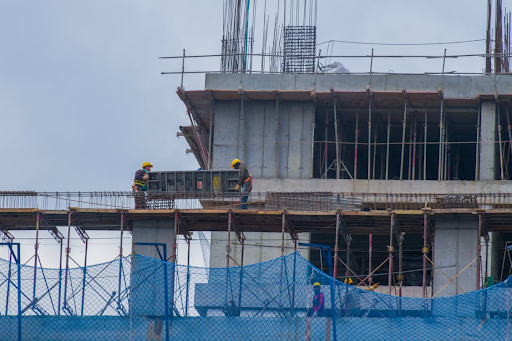
Why Do Councils Require Scaffold Mesh on Some Construction Sites?
Councils do not require scaffold mesh on every project, but they frequently make it a condition where there is a risk to the public or neighbouring properties. If your build is next to a footpath, road, boundary fence, school, or other high-traffic area, scaffold mesh is commonly required as part of approval conditions.
The reasoning is straightforward: reduce risk beyond the site boundary. Scaffold mesh helps contain dust, light debris, and loose materials, while also improving the visual presentation of the site. This reduces complaints about overspray, litter, and materials blowing into surrounding areas.
You will usually see these requirements enforced through permit conditions, Construction Management Plans (CMPs), and site inspections. In practice, councils are less concerned with the product itself and more focused on outcomes—keeping the public safe and maintaining local amenity.
It is also important to understand that terminology varies. Scaffold mesh may also be referred to as scaffolding mesh, scaffold netting, or scaffold shade cloth, depending on the supplier or specification. On most sites, it forms part of a broader system that includes mesh fencing or site mesh at ground level to fully control the site perimeter.
This becomes particularly important during structural stages. Activities like formwork, reo installation, and concrete pours increase movement and risk at height, making scaffold mesh a practical control to limit off-site impact.
When Is Scaffold Mesh Mandatory for Building Projects?
Scaffold mesh becomes mandatory when it is specified in approvals or required to meet safety obligations. This requirement can come from council conditions, WHS expectations, or the principal contractor’s risk management plan.
On many Australian sites, it is not optional once identified as a control measure.
Common situations where scaffold mesh is required
Scaffold mesh is typically required on projects where the consequences of falling debris are higher. This includes multi-storey construction, boundary-to-boundary builds, and scaffolding installed along public accessways.
It is also common on demolition projects, façade works, and sites exposed to strong winds, such as coastal or elevated locations. Wind increases the likelihood of debris, dust, and loose materials leaving the site, which is exactly what councils aim to prevent.
High-risk stages that trigger scaffold mesh requirements
Even if not explicitly stated in approvals, certain construction stages increase risk to the point where scaffolding mesh becomes necessary under general safety duties.
These include:
- Reo delivery and tying near edges
- Formwork installation and stripping
- Concrete pouring and pump operations
- Cutting, grinding, and surface preparation
These activities generate debris, dust, and movement, making containment essential.
Choosing between 50% and 90% coverage
Coverage selection depends on the site environment and risk level.
- 50% scaffold shade cloth allows airflow while providing basic containment. It is suitable for lower-risk or less exposed sites.
- 90% scaffold netting offers stronger dust control, improved privacy, and better visual screening, making it more appropriate for dense urban areas or sensitive neighbours.
What to confirm early
To avoid delays or compliance issues, review all documentation before scaffold installation. This includes development consent conditions, CMPs, Traffic Management Plans, and any public protection requirements.
Leaving this check too late often results in retrofitting mesh mid-project, which is inefficient and costly.
What Safety Risks Does Scaffold Mesh Help Prevent?
Scaffold mesh is not a standalone safety system, but it plays an important role in reducing risks associated with working at height.
Containing falling objects and debris
One of the main functions of scaffold mesh is to prevent small items from leaving the work platform. Loose materials such as fasteners, offcuts, formwork components, and packaging can easily be dislodged during normal site activity.
Without containment, these items can travel beyond the scaffold edge, particularly in windy conditions. Scaffold netting reduces that risk significantly.
Supporting worker safety
While scaffold mesh does not replace guardrails or toeboards, it complements them. It helps reduce the chance of materials bouncing or being knocked off edges and provides a more controlled work zone.
On busy decks, especially during formwork or reo installation, this added control helps prevent accidental drops and improves overall safety awareness.
Reducing dust and improving site amenity
Dust control is one of the most common reasons councils require scaffold mesh. Activities like cutting, grinding, and concrete work can generate visible dust plumes that affect neighbouring properties.
Using the right scaffold shade cloth—particularly higher coverage options—helps limit this spread. It also improves the appearance of the site, which can reduce complaints and council attention.
Structural stage containment (formwork and reo)
During structural work, the risk of loose materials increases. Handling plywood sheets, LVL members, and reinforcement creates more opportunities for debris to fall.
Scaffold mesh works best when combined with good housekeeping, proper storage, and additional controls like tool lanyards and toeboards.
What Standards Must Scaffold Mesh Meet on Construction Sites?
Councils generally do not specify a single standard for scaffold mesh. Instead, they expect it to be suitable for the intended purpose and compliant with broader WHS and scaffold requirements.
Key performance considerations
When selecting scaffold mesh, focus on durability and reliability. UV resistance is essential for Australian conditions, especially on long-duration projects. Tear strength is also important, particularly where mesh is exposed to wind or frequent handling.
Reinforced edges and secure eyelets improve installation quality and reduce the risk of failure at fixing points. Consistent shading levels are also important when using scaffold shade cloth for visual or dust control.
Coastal and long-term installations
Projects in coastal environments or those running for extended periods require higher-quality materials. UV-resistant mesh and corrosion-resistant fixings help maintain performance over time.
Conditions in these environments accelerate wear, so selecting the right materials from the start reduces maintenance and replacement costs.
Maintenance and inspections
Even high-quality scaffold mesh can become ineffective if it is not maintained. Torn, loose, or poorly fixed mesh can quickly become a compliance issue.
Regular inspections should be part of the site routine, with particular attention after strong winds or storms. Damaged sections should be replaced promptly to maintain coverage and effectiveness.
Documentation requirements
Keep product datasheets, installation guidelines, and compliance documentation on-site. These support safety planning and make inspections smoother if council or WHS representatives visit.
Who Is Responsible for Installing Scaffold Mesh on Site?
Responsibility for scaffold mesh ultimately sits with the principal contractor or builder. They are accountable for ensuring all site controls, including temporary scaffolding systems and attachments like mesh, meet project and regulatory requirements.
Licensed scaffolders are typically responsible for installation and adjustments. Workers and subcontractors should not modify scaffold mesh unless authorised.
How responsibility is managed
The builder or principal contractor identifies requirements early, allocates budget, and ensures installation aligns with project timelines. Scaffolders install the mesh according to system specifications and safety standards.
Subcontractors are expected to follow site rules and report any damage or issues.
Coordinating scaffold mesh with other controls
Scaffold mesh should be part of a broader system, not treated in isolation. This includes mesh fencing at ground level, exclusion zones during high-risk activities, and strong housekeeping practices.
A coordinated approach reduces gaps in protection and improves overall site control.
Planning installation around site activities
Timing matters. Scaffold mesh should be installed before high-risk stages such as upper-level structural work, façade installation, or extended external exposure.
If the site is adjacent to public areas, coordination with pedestrian and traffic management is also critical to ensure safe access and visibility.
Practical Takeaway
Scaffold mesh is not always mandatory, but on many Australian construction sites, it effectively becomes required once risk and public exposure are considered.
The most reliable approach is to:
- Check council and project requirements early
- Choose appropriate coverage (50% or 90%)
- Use durable, UV-resistant materials for longer jobs
- Maintain mesh through regular inspections
- Integrate it with fencing, exclusion zones, and site controls
When scaffold mesh is planned and installed properly, it improves safety, reduces complaints, and keeps projects moving without unnecessary interruptions.