
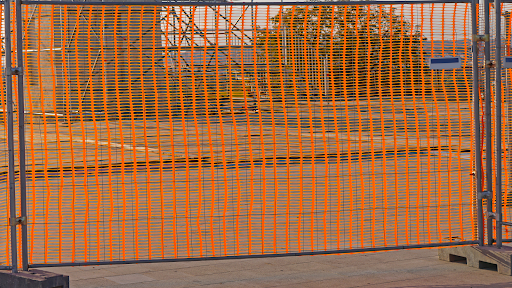
How Is Mesh Fencing Used for Temporary Site Security and Access Control?
You Also May Like:
- Choosing Between Chain & Shade Mesh: 50% and 90% Coverage
- Using Chain & Shade Mesh for Noise Reduction on Urban Construction Sites
- The Role of Chain Shade Mesh in Construction: Protecting Workers and Materials
Temporary sites face a unique challenge: they need strong security without the permanence of fixed infrastructure. Construction zones, demolition sites, roadworks, and short-term projects all require barriers that protect workers and the public while remaining flexible as the site evolves. This is where Mesh Fencing plays a central role in temporary site security and access control.
Mesh fencing creates a clear, physical boundary around active work areas. It defines where the public can and cannot go, restricts unauthorised access, and helps site managers maintain control without blocking visibility or disrupting daily operations. When installed and maintained correctly, it becomes one of the most effective temporary security solutions available.
What Is Mesh Fencing and Why Is It Used on Temporary Sites?
Mesh fencing is made from welded wire panels that connect together to form a continuous perimeter. Unlike permanent fencing, it is designed to be installed quickly, relocated easily, and adjusted as site layouts change.
Its importance goes beyond simply marking a boundary. A secure perimeter reduces theft, vandalism, and unauthorised entry, all of which can cause delays, safety incidents, and financial losses. At the same time, mesh fencing protects the public by preventing accidental access to hazardous areas where heavy machinery, excavation, or structural work is underway.
Because mesh fencing balances strength with adaptability, it has become the standard solution for temporary worksites that need security without sacrificing practicality.
How Does Mesh Fencing Provide Security Without Blocking Visibility?
One of the biggest advantages of mesh fencing is transparency. Unlike solid hoarding, the open mesh design allows people to see through the barrier while still preventing entry.
This visibility improves site security because supervisors, security staff, and even passing observers can easily spot suspicious behaviour. It also supports safety by allowing hazards to be identified quickly, both from inside and outside the perimeter. Emergency services can assess conditions before entering, and site managers can monitor activity without constantly stepping into high-risk zones.
From a public perspective, visibility reduces uncertainty. Pedestrians can see machinery movements or active work areas and adjust their behaviour accordingly, which lowers the risk of accidents near the site boundary.
How Is Mesh Fencing Used to Control Site Access?
Effective access control is not about blocking all movement—it’s about controlling where movement happens. Mesh fencing allows site managers to funnel entry and exit through designated points while securing the rest of the perimeter.
Access control is typically achieved by combining fencing runs with lockable gates. Pedestrian gates manage worker and visitor entry, while wider gates accommodate deliveries, plant, and machinery. Because the fencing is modular, access points can be relocated as the project progresses, ensuring the site layout remains efficient without compromising security.
Mesh fencing is also commonly used inside sites to separate high-risk zones, storage compounds, or restricted work areas, adding an extra layer of control beyond the outer boundary.
What Makes Mesh Fencing Resistant to Tampering on Temporary Sites?
Although mesh fencing is temporary, it is designed to resist common methods of intrusion. Security doesn’t rely on a single feature, but on how the system is installed and configured.
Well-installed mesh fencing reduces risk by:
- preventing panels from being lifted or separated easily
- minimising gaps at ground level or between panels
- using secure connections and stable bases
- limiting climb opportunities through panel height and mesh spacing
These measures are especially important after hours, when sites are most vulnerable to opportunistic access or theft.
How Does Mesh Fencing Stay Stable in Wind and Harsh Conditions?
Temporary fencing must remain upright and secure in changing weather. Mesh fencing performs well in these conditions because the open design allows wind to pass through instead of building up pressure like a solid wall.
Stability is achieved through appropriate footing choices and bracing. On hard surfaces, weighted bases provide resistance to movement. On softer ground, driven stakes or ground pins may be used where permitted. In exposed or coastal locations, heavier bases and additional reinforcement are often added to maintain perimeter integrity.
Regular inspections—especially after storms or high winds—ensure the fence line continues to perform as intended throughout the project.
Why Is Mesh Fencing Easier to Monitor Than Solid Barriers?
From a site management perspective, mesh fencing makes monitoring simpler and more efficient. Because activities remain visible, supervisors don’t need to enter hazardous areas just to check progress or compliance.
Visibility supports:
- faster detection of unauthorised access
- clearer CCTV coverage without blind spots
- quicker emergency response
- better awareness for neighbouring properties and road users
This natural surveillance effect improves both safety outcomes and security performance across the site.
What Are Best Practices for Installing and Maintaining Mesh Fencing?
Mesh fencing only performs well when it’s installed correctly and maintained consistently. Rushed installation or neglected maintenance can turn a security asset into a liability.
Best practice focuses on:
- preparing level ground to avoid gaps or leaning panels
- aligning panels tightly and securing all connection points
- positioning gates logically and keeping them locked when unattended
- inspecting the fence line regularly and after severe weather
- replacing worn clips, ties, or damaged panels promptly
Good documentation of inspections and maintenance also supports compliance and demonstrates due diligence during audits or incident reviews.
Conclusion
Mesh fencing is used to create secure, visible, and adaptable perimeters that support both site security and controlled access. It protects workers, deters unauthorised entry, and keeps the public away from hazards without obstructing visibility or daily operations.
When installed properly and maintained throughout the project, site mesh provides reliable temporary site security while keeping sites flexible as conditions change. For construction, demolition, and short-term works, it remains one of the most practical and effective access control solutions available.