
Are Deformed Reobars Stronger Than Plain Reobars for Structural Concrete?
You Also May Like:
- How to Safely Handle and Store Reobars On-Site
- Reo Bar Basics: Grades, Sizes, and Applications in Aussie Construction
- The Importance of Reobars in Reinforced Concrete Structures
Are deformed reobars stronger than plain reobars for structural concrete? In most structural situations, yes. The steel itself can be manufactured to the same strength grade, but deformed reobars deliver better structural performance because they bond far more effectively with concrete. That improved bond reduces slip, enhances load transfer, and helps reinforced concrete behave as a single composite system rather than two materials working independently.
Concrete is excellent in compression, but it performs poorly in tension. That’s why reobars are used in slabs, beams, columns, footings, and walls—steel carries tensile forces while concrete carries compressive forces. The connection between the two is where the real difference lies. If a bar slips inside the concrete under load, the reinforcement can’t do its job properly, no matter how strong the steel is on paper.
What Is the Practical Difference Between Plain and Deformed Reobars?
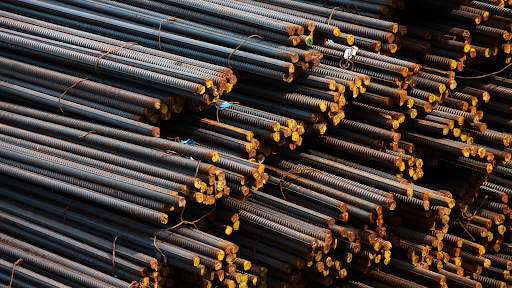
Plain reobars (sometimes called plain round bars) are smooth and cylindrical. They rely mostly on friction and adhesion to resist movement within the concrete. Deformed reobars have ribs or lugs rolled into the surface. Those ribs create mechanical interlock: concrete hardens into the spaces between the ribs, making it much harder for the bar to pull out or slide.
This matters because reinforced concrete design assumes the steel and concrete act together. In tension zones—like the bottom of a suspended slab or the mid-span of a beam—bond strength is critical. When cracking begins (which is normal in reinforced concrete), a bar must still “hold” the concrete and control crack widths while continuing to transfer load. Deformed reobars do that more reliably.
Are Deformed Reobars Actually “Stronger” Steel?
Not necessarily. A plain bar and a deformed bar can be the same diameter, the same grade, and have the same yield strength. The difference is not the steel’s tensile capacity—it’s the reinforced system’s capacity. Deformed reobars generally allow:
- better bond strength between steel and concrete
- improved resistance to slippage under tension or vibration
- shorter development lengths to achieve full anchorage
- more predictable crack control and load sharing
So when people say deformed reobars are “stronger,” what they usually mean is that the reinforced concrete member performs better and more safely because the reinforcement is anchored more effectively.
Why Does Bond Strength Matter So Much in Structural Concrete?
Bond strength governs how efficiently load transfers between concrete and steel. In structural elements, tensile forces must move from the concrete into the reobars and back again along the bar length. If bond is weak, the bar can begin slipping long before the steel reaches its full capacity. That can lead to larger cracks, greater deflection, and premature loss of stiffness.
Deformed reobars reduce those risks because their ribs act like a series of anchors. Instead of relying on a smooth surface with limited friction, they engage the concrete mechanically. This becomes especially important under dynamic loading (traffic, machinery, vibration) or where cracking is expected to be more pronounced (suspended slabs, cantilevers, beams, and heavily loaded footings).
When Are Plain Reobars Still a Reasonable Choice?
Plain reobars aren’t “bad”—they’re just suited to different tasks. They can still be appropriate in lower-demand situations where the reinforcement isn’t required to develop high bond strength, or where the bar’s primary function is tying or positioning.
Common non-structural or secondary uses include:
- ties and ligatures to hold primary reinforcement in place
- dowels in concrete joints where movement is controlled
- light-duty concrete works with minimal tensile demand
- secondary reinforcement where design loads are low
In these roles, the simplicity of plain reobars can be an advantage. They’re often easier to bend and fabricate on-site, and they can be more cost-effective when the engineering design doesn’t require high bond performance.
How Does Installation Affect the Performance of Both Rebar Types?
Correct installation is just as important as the bar type. Deformed reobars can still underperform if they’re placed incorrectly, don’t have sufficient cover, or shift during the pour. Plain reobars, even in suitable applications, can fail to meet expectations if the bar is not properly anchored or is used where high bond is required.
Performance depends heavily on practical details like spacing, cover, and stability in the cage. If bars sag, end up too close to the surface, or move during vibration, you may lose the intended structural behaviour. In structural work, the interaction between reobars, chairs, tie wire, and concrete placement technique is what ensures the design intent is achieved.
What Other Factors Influence the Choice Between Plain and Deformed Reobars?
Beyond structural behaviour, the choice of reobars can be influenced by project conditions. Environmental exposure matters because corrosion risk affects long-term durability. In harsh exposures (coastal conditions, aggressive ground water, industrial environments), the overall specification may call for added corrosion protection, increased cover, or specific durability requirements regardless of whether bars are plain or deformed.
Budget also plays a role, but it should be assessed in context. Plain reobars can be cheaper upfront, but if a structural element requires greater embedment lengths, additional steel, or more conservative detailing to compensate for reduced bond, the “savings” can shrink quickly. In most structural concrete work, deformed reobars remain the standard choice because they simplify compliance with typical engineering detailing and provides a more reliable outcome.
Compatibility with detailing and construction methods also matters. Engineers usually design primary load paths assuming deformed reobars because their anchorage and crack-control performance is more predictable. Where formwork pressures, congestion, and placement challenges exist, using the reinforcement type that best aligns with the structural design reduces the risk of site variation and non-conformance.
Conclusion
Are deformed reobars stronger than plain reobars for structural concrete? Yes, in practical structural terms. While both can be produced in the same steel grades, a deformed reobar delivers superior performance because their ribbed profile creates stronger bonding and mechanical interlock with concrete. That reduces slippage, improves load transfer, and supports more reliable crack control in structural members.
Plain reobars still have a place in construction, particularly for ties, dowels, and low-demand applications where maximum anchorage isn’t required. But for structural slabs, beams, columns, and footings—where tensile performance and bonding are critical—deformed reobars are typically the better choice.